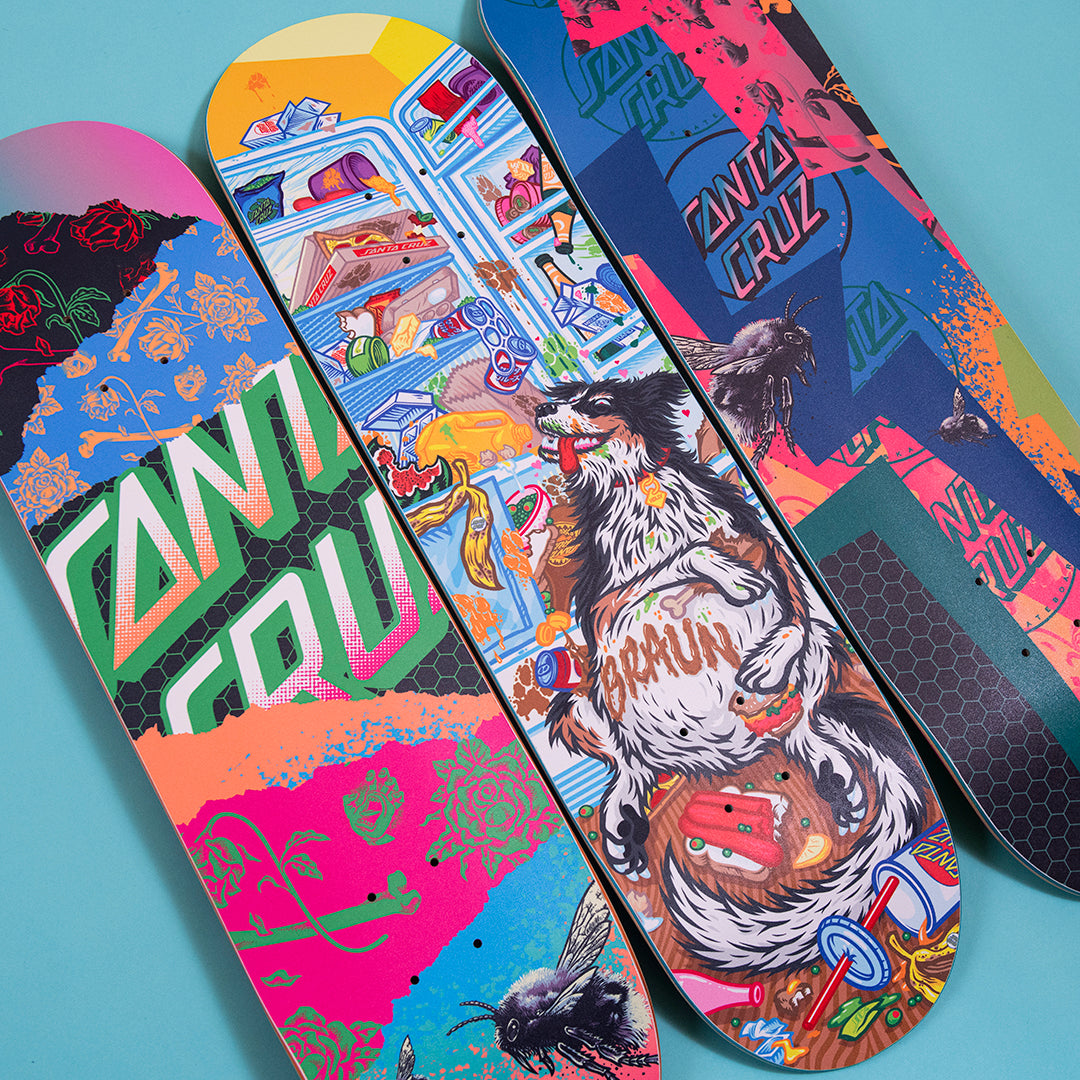
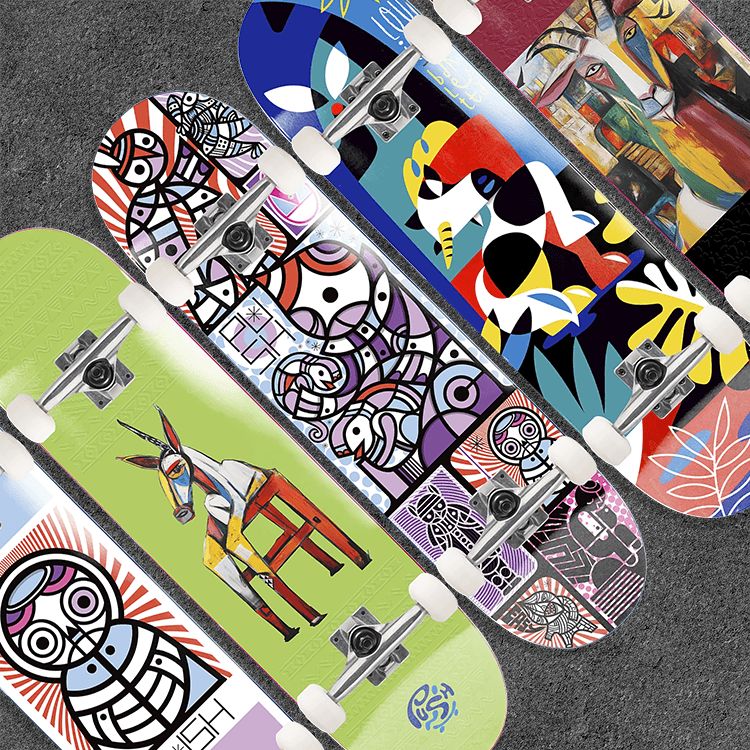

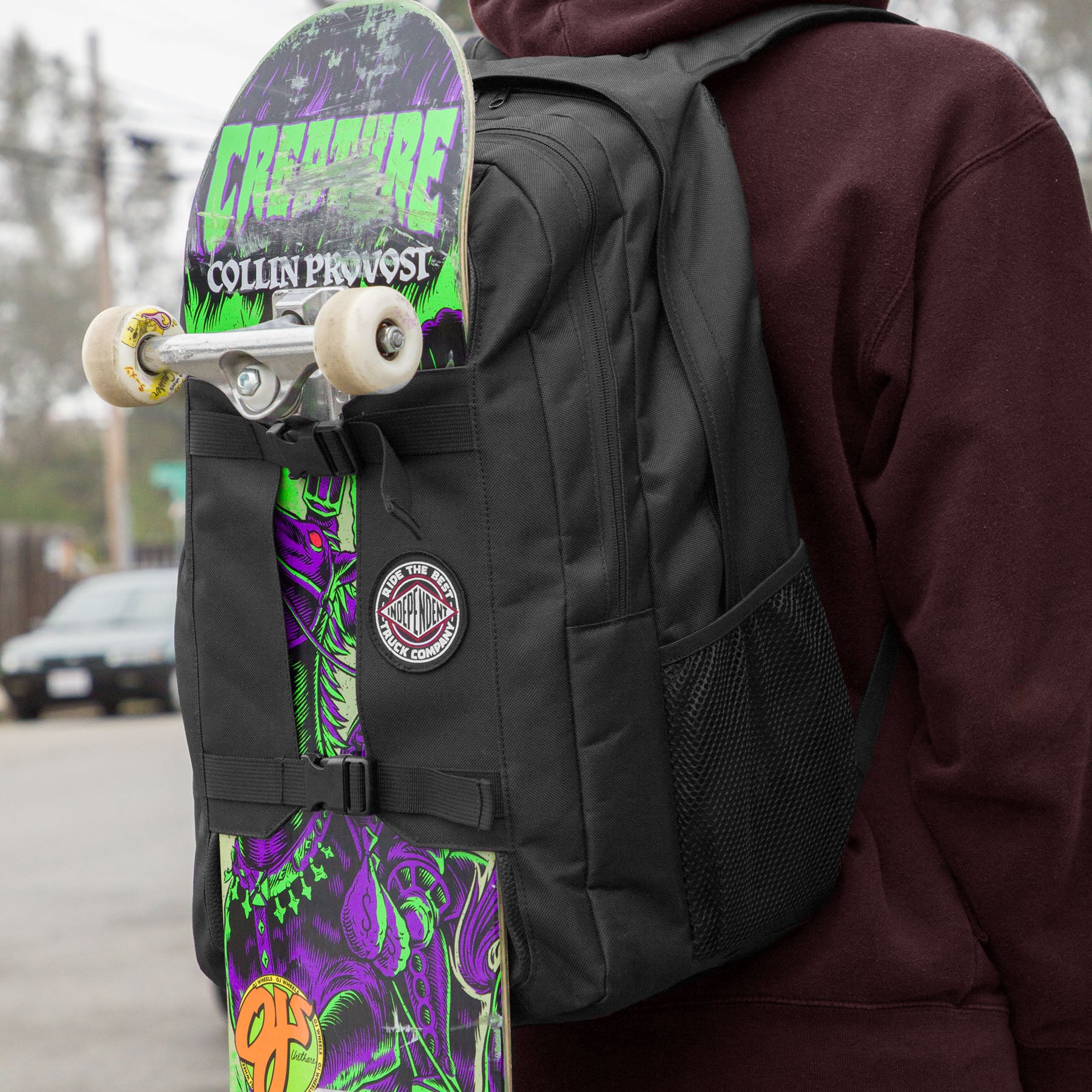
 It's the question we get most in the shop. The short answer: most people ride something between 8.0" and 8.5". The longer answer depends on your feet, how you skate, and what feels right. Here's how we help people pick.
Width is what matters
Decks are sold by width, measured across the middle in inches. Length changes a little between brands, but width is what you'll feel. Wider boards feel more stable. Narrower boards flip and turn quicker.
Start with your shoe size
- Kids and small feet (US 6 and under): 7.0"–7.75"
- Most street skaters (US 7–10): 8.0"–8.25"
- Bigger feet (US 10+): 8.38"–8.5" and up
That gets you close. Then adjust for how you skate.
Then think about how you skate
- Flip tricks, ledges, flat ground: go to the narrower end of your range.
- Stairs, gaps, rails: a bit wider gives you more to land on.
- Bowls, ramps, transition: 8.5" and up feels more stable at speed.
- Just cruising or learning: 8.0"–8.25" is a safe middle.
Shape and concave
Two decks with the same width can feel different. Some have deeper concave (the curve from edge to edge), steeper kicks, or a longer wheelbase. If you liked a board before, check its specs and stay close. Every deck page on our site lists width, length and wheelbase.
Match your trucks
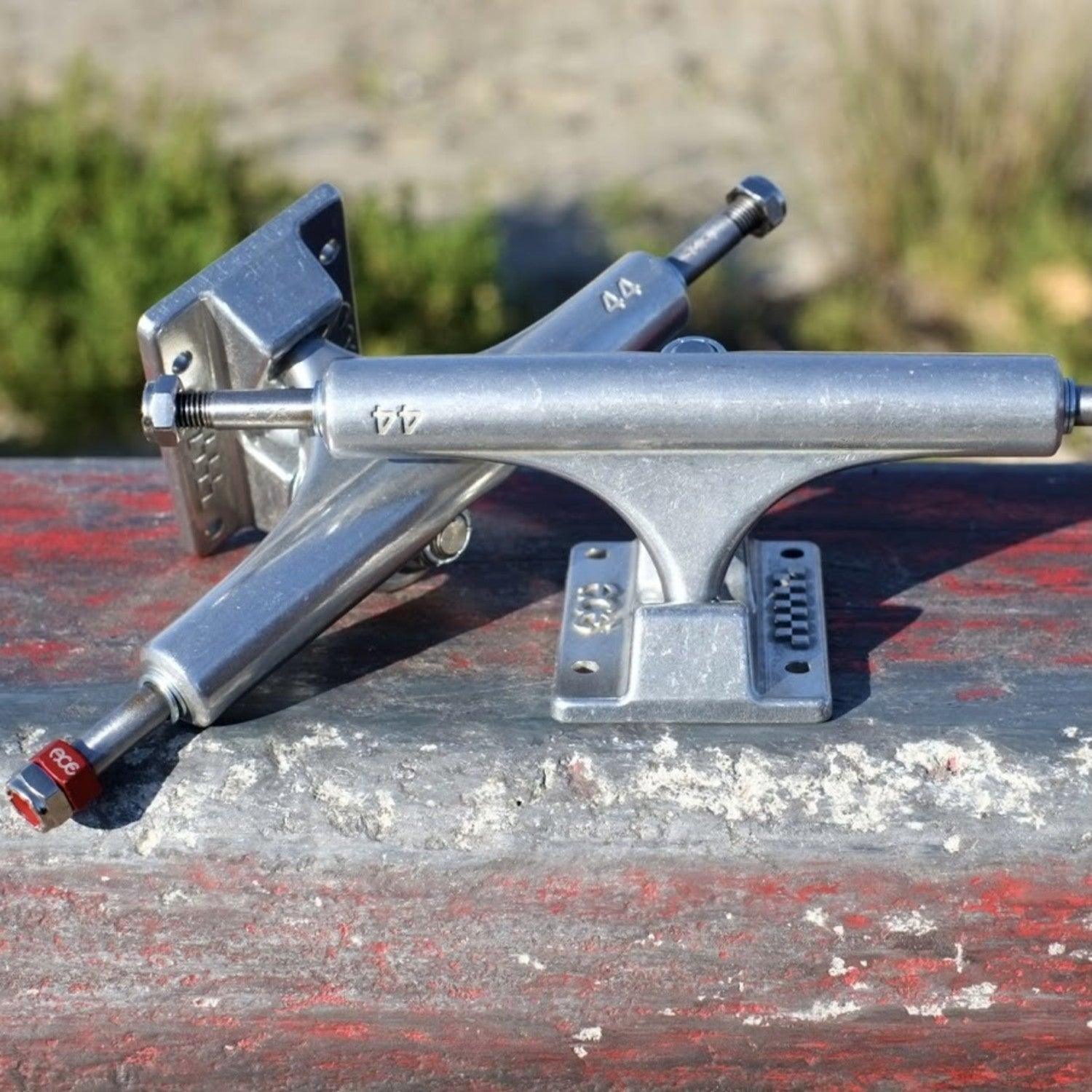
Your trucks should be roughly as wide as your deck. A 8.25" deck usually wants trucks around 8.0"–8.25" axle width. Ask us and we'll match them.
For kids
Go by age and height first:
- Ages 3–6: 7.0"–7.25" mini completes
- Ages 6–10: 7.25"–7.5"
- Ages 10–13: 7.75"
- Teens: 8.0" and up
A complete (deck, trucks, wheels and bearings already built) is the easiest way to start. See completes.
Still not sure?
Come stand on a few. Habibi Skate Shop is inside Gooder, Alserkal Avenue, and the park is right there to try things out. Every deck comes with free Jessup grip, and we'll grip and build it for you.