It felt like the first day of school.
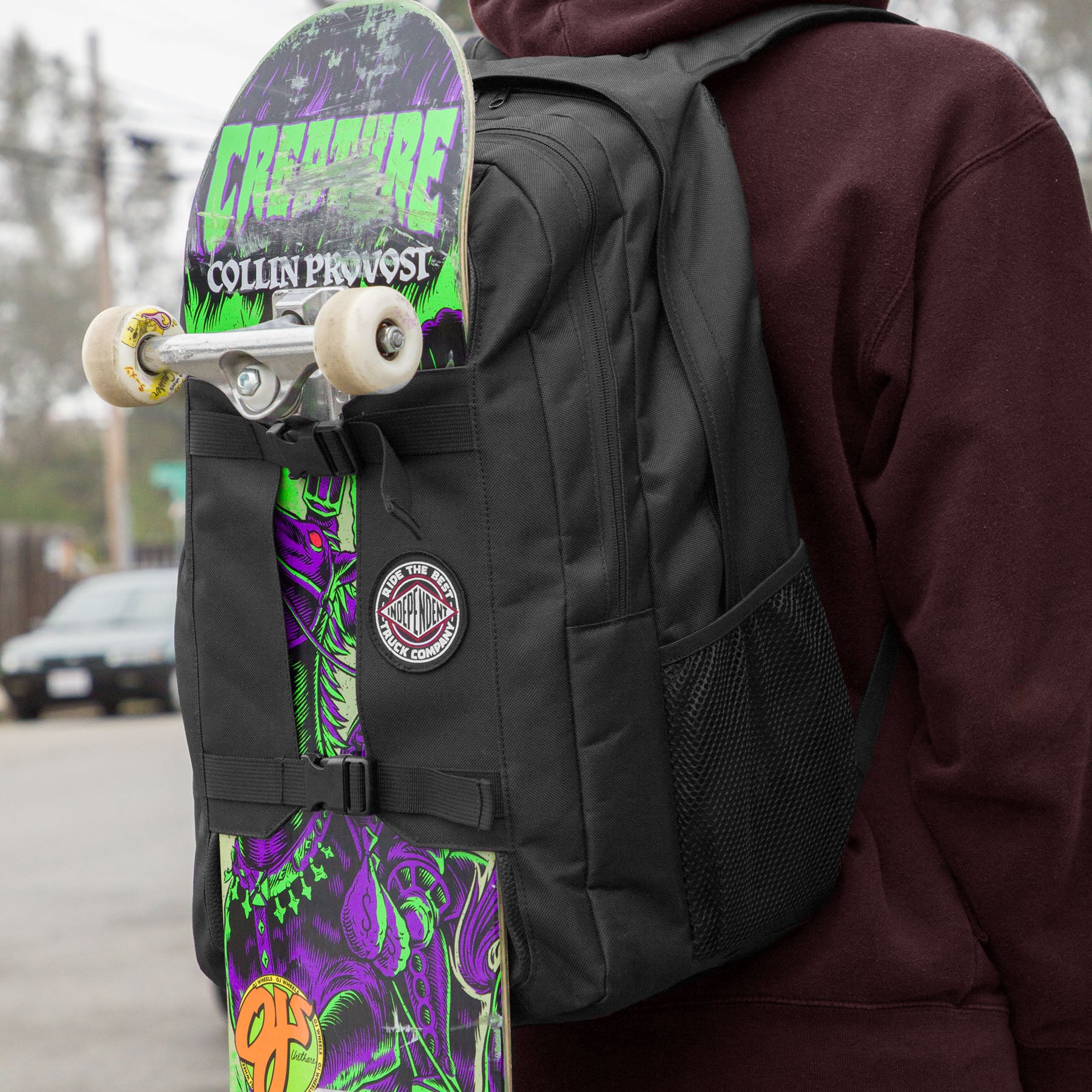
Seventeen months of work, strategy, decisions and pushing every limit we had came down to one day: 28 February 2026. I even asked Greta to take a photo of me with my backpack on before I left the house. It was a beautiful day. It was supposed to be a big step for the local skate scene, and for everyone across the region who could celebrate it with us.

The doors opened and people walked in all at once. The first thing we sold at Habibi in the new shop was a Heritage 411 Video Magazine tee.
Dazed MENA was there with a camera that day, before any of it started. They put the video out on 17 March. It's a glimpse of what that day felt like for a few hours.
Watch on Instagram: Dazed MENA at Gooder's opening day
The murmurs
There was no news, at first. I was running around playing host and checking on operations. Greta was there, Ali was there, and we were enjoying the moment.
Then the murmurs started. Did you hear? Saudi got hit. Kuwait got hit. Someone asked if I'd checked social media. It was launch day. I hadn't looked at my phone.
When I did, the first thing I saw was that Kuwait had been struck multiple times. I called my friend Saud Bourahmah, who owns Jarib Skate Shop in Kuwait, to check he was okay and to ask if it was true. His tone was short, matter-of-fact, almost a whisper.
"Yeah, I'm okay. Yeah, it's true. Shit got real."
Within moments we heard the interceptions overhead.
The call
A crowd formed at the entrance.

We stepped outside and saw plumes of smoke in the sky.

The UAE had never seen conflict like this. We didn't know what we were looking at.
I sent Greta home to be safe. On the way, she called. It was kicking off near our house too, and she could see missiles overhead.
I stood against the wall outside and tried to process it. Seventeen months of work flashed before my eyes. So did the celebration I'd imagined, and every dream I had for skating in this region.
Then a memory from Kabul came back. Despite the skating, the music, the laughs and the good vibes around me that afternoon, the air turned serious, just like I'd felt it turn once in Afghanistan. You can feel it get thick. You know things can turn on a dime. In Kabul, they did.
I recognised that feeling. That's when I made the call to close.
There were kids, teenagers and adults inside. I didn't want to cause panic or say anything inaccurate. I told them something like: I'm so sorry, we're closing. I'm not sure what's going on, but it doesn't seem safe. It's best you head home now. A lot of them had come by bus, train or scooter, so I wanted them out well before anything escalated. Better safe than sorry.
The days after
It was scary. The sounds were terrifying. The defence systems were working, and working well, but it's still a frightening thing to witness. Nobody knew exactly what was happening. All we knew was that the UAE was under attack.
You'd get two or three quiet hours, then hear that another country where you have friends had been hit hard. Greta grew up in South Africa, nowhere near any of this. Even our cat, Thula, wasn't herself. Overnight the neighbourhood went silent: no leaf blowers, no kids playing, no other cats.
If I'm honest, I'm not sure I've processed all of it to this day. I've processed enough to carry on.
Opening, closing, opening
We reopened a few days later. We weren't ready.
Alserkal had become a shell of itself, quiet, like there wasn't a soul around. Being there felt like theatre: we've launched, so we have to open. How do you clock in and run a business when all of this is happening around you?
It was dissonance.
It took a couple more tries. We talked as a team. We talked to the Alserkal community and listened to what the government was advising. In the end the question was simple. All of this sucks. Would we feel better with the doors open, around each other?
The answer came from the community: skaters, friends, and parents who'd glimpsed Gooder on that one short opening day and wanted somewhere to go. So we opened.
What Gooder became
Before the war, we had a plan for who would skate when, and the lessons and programmes built around that. The war flipped it. We changed our hours around the quieter times in the sky, and suddenly everyone turned up at once. Adults arrived at 10am. Kids arrived at 10am with their parents. Nobody was at work and nobody was at school.
It was hard. Some parents seemed hostile and aggressive. It took us about a week to understand the pressure they were under: uncertain jobs and cash flow, worries about safety, school moved home with parents teaching the curriculum, and cabin fever on top of everything.
Gooder became the place where parents could sit, breathe and unwind while their kids skated with other kids and burned off all that energy.
Through all of it, we saw clearly how important a place like this is, in a time like that and outside of it.
The word that keeps coming to mind is sanctuary: a place where people escape, come together and work through life with a community that shares the same passion.
Why we showed up
I don't think I'm qualified to give advice. I won't pretend I know exactly why we managed it.
What I do know is that when you're a skater this attached to your community, there's an obligation to show up, like they're your children. Gooder is a business, yes, but it's also a community centre, and a lot of the time it runs like a non-profit. Having a clear reason, knowing what the mission is, may have been what got us through.
This is home.
Watch: Building Dubai's Skate Community During Uncertainty, This. Is. Dubai.